

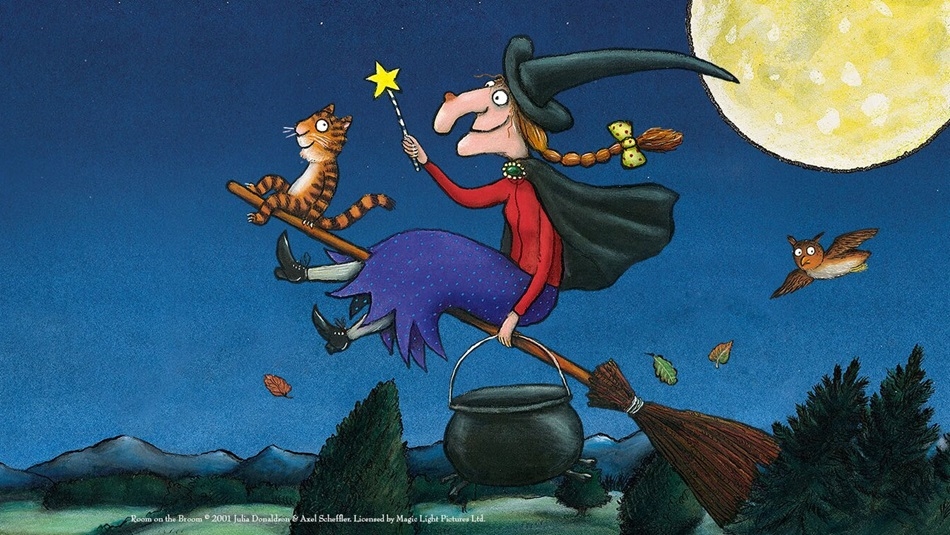
When Julia Donaldson and Axel Scheffler released Room on the Broom in 2001, they didn’t just create a children’s book; they crafted a masterclass in hospitality and teamwork.
For Australian families, this rhyming tale of a kind-hearted witch and her ever-growing entourage has become a staple of the bedtime routine. It serves as a gentle reminder that there is always room for one more, provided there is a willingness to cooperate.
The story follows a witch and her cat flying through the sky, only for the witch to lose her hat, bow, and wand in successive gusts of wind.
Each item is recovered by a different animal—a dog, a bird, and a frog—who all ask the same hopeful question: “Is there room on the broom for a [pet] like me?” Despite the cat’s initial scepticism, the witch always says yes.
A Lesson in Social Inclusion
At its heart, the narrative is about social cohesion. In an era where digital screens often replace face-to-face interaction, the “broom” represents a shared communal space. It is an allegory for how we treat newcomers in our own lives. The witch’s immediate “yes” to each animal reflects a spirit of generosity that is vital for childhood development.
This sense of community is backed by broader social trends in Australia. According to data from the Australian Bureau of Statistics (ABS), social connection remains a cornerstone of well-being; their General Social Survey indicated that approximately 93% of Australians felt they had someone outside their household they could rely on for support in times of crisis. Much like the witch’s ragtag team coming together to defeat a “hungry dragon,” Australians value the safety net provided by a diverse social circle.
The Power of Collaborative Problem Solving
The climax of the story occurs when the broom snaps in two, leaving the witch vulnerable to a dragon who “intends to have witch and chips for his tea.” It is only through the collective ingenuity of the animals—who disguise themselves as a “horrible beast”—that the witch is saved.
This reinforces a crucial developmental lesson: individual weaknesses are often mitigated by collective strengths. By organising themselves and acting as one, the smaller animals overcome a much larger threat. This mirrors the emphasis on collaborative learning in Australian early childhood education frameworks, which prioritise “belonging” as a fundamental stage of a child’s identity.
Creating Room in the Modern Home
While the witch manages to fit everyone on a piece of enchanted wood, modern Australian families often find themselves looking for more practical ways to accommodate guests and growing broods.
The “broom” in our world is often the dining table or the living room. As we embrace more communal styles of living, the furniture we choose reflects that same “always room for one more” philosophy found in room on the broom.
Just as the witch eventually “taps the cauldron” to create a magnificent new broom with seats for everyone, homeowners are increasingly opting for flexible seating arrangements.
Bench seats, for example, have seen a resurgence in Australian interior design because they allow for a “squeeze in” mentality that traditional chairs simply don’t offer.
Why the Rhyme Resonates
The linguistic structure of the book is another reason for its enduring popularity. The rhythmic, repetitive stanzas make it easy for children to memorise and participate in the reading process. This phonological awareness is a key indicator of future literacy success.
Recent findings from the Australian Institute of Family Studies (AIFS) suggest that shared reading experiences are one of the most significant predictors of emotional bonding between parents and children. When a parent and child recite “Iggety, ziggety, zaggety, ZOOM!” together, they aren’t just reading; they are synchronising their emotions and focus.
Tips for Bringing the Story to Life at Home
If you are looking to extend the magic of the book beyond the final page, consider these activities:
- Role-Play and Drama:Use a simple garden broom and stuffed animals to reenact the story. This helps children understand the perspective of the different characters—especially the cat, who must learn to share his space.
- The “Magnificent” Cauldron:Cook a “stew” together. Let your child choose “ingredients” (vegetables) to add to the pot, mimicking the way the animals added items to the cauldron to create the new broom.
- Discussing Kindness:Ask your child what they would do if they were the witch. Would they let the frog join? Why? These conversations build empathy and social intelligence.
Conclusion
The enduring legacy of Room on the Broom lies in its simplicity. It doesn’t preach; it demonstrates. It shows that while the journey might be bumpy and the “broom” might occasionally break under the weight of our responsibilities, things are always easier—and much more fun—when we travel together.
In a world that can sometimes feel individualistic, the witch’s open-door (or open-broom) policy is a refreshing breath of fresh air. It encourages us to look at our own “brooms”—our homes, our friend groups, and our communities—and ask if we can make a little more room for someone new. After all, you never know when a bird or a frog might be the very friend you need to help you scare away a dragon.
 Arsya
Arsya